
 English
 русский
 Español
 Deutsch
 عربى
 italiano
 中文
Air Flow and Pressure Meter Selection: What Actually Matters on the Line
Why gas flow meters and pressure gauges are specified together, where variable-area meters earn their keep, and the calibration details that decide whether a reading can be trusted.
A plant engineer auditing compressed air, an OEM building oxygen concentrators and a workshop setting shielding gas at a welder are really asking the same two questions: how much gas is moving, and under what pressure. A meter that answers only one of those questions produces numbers that look precise and mean very little.
The short version: for most industrial air and gas duties — panels, purges, analyzer sample lines, medical oxygen, burner air — a variable-area rotameter paired with a correctly ranged Bourdon pressure gauge remains the most dependable and economical combination. It reads at a glance, needs no power supply and shows the trend immediately. What actually decides accuracy is not the meter body but the match between calibration pressure and real line pressure, and that is where most disappointing purchases originate.
Why Flow and Pressure Have to Be Read Together
Gas is compressible, so its density — and with it everything a flow meter senses — changes with pressure. A variable-area meter is calibrated for one gas at one stated pressure and temperature. Run that same meter at a higher line pressure and the float rides higher than the true flow; run it lower and it reads low.
The size of the error surprises people. An air rotameter calibrated near atmospheric pressure can indicate more than twice the true flow on a line held at 4 bar gauge. The float is doing its job; the density of the gas surrounding it has simply changed. This is why a pressure gauge mounted beside the flow meter is not decoration. It is the reference that makes the flow number interpretable, and it is the reason air flow and pressure belong in one specification rather than two.
Where Variable-Area Meters Fit Among the Alternatives
No single technology covers every gas duty, and a specification written honestly starts with the comparison:
| Technology | Best suited to | Strengths | Watch-outs |
|---|---|---|---|
| Variable area (rotameter) | Small and medium gas panels, purges, oxygen, lab gas | Direct visual reading, no power supply, low cost, tolerant of disturbed flow | Must be mounted vertically; reading valid only at calibration pressure |
| Thermal mass | Compressed-air mains, energy audits | Mass flow independent of pressure and temperature | Higher cost; needs clean, dry gas |
| Vortex | Hot, high-velocity gas and steam lines | Robust and temperature-tolerant | Signal fades at low flow |
| Differential pressure | Ducts, large pipes, orifice installations | Simple hardware, handles high temperature | Needs straight run and square-root calculation |
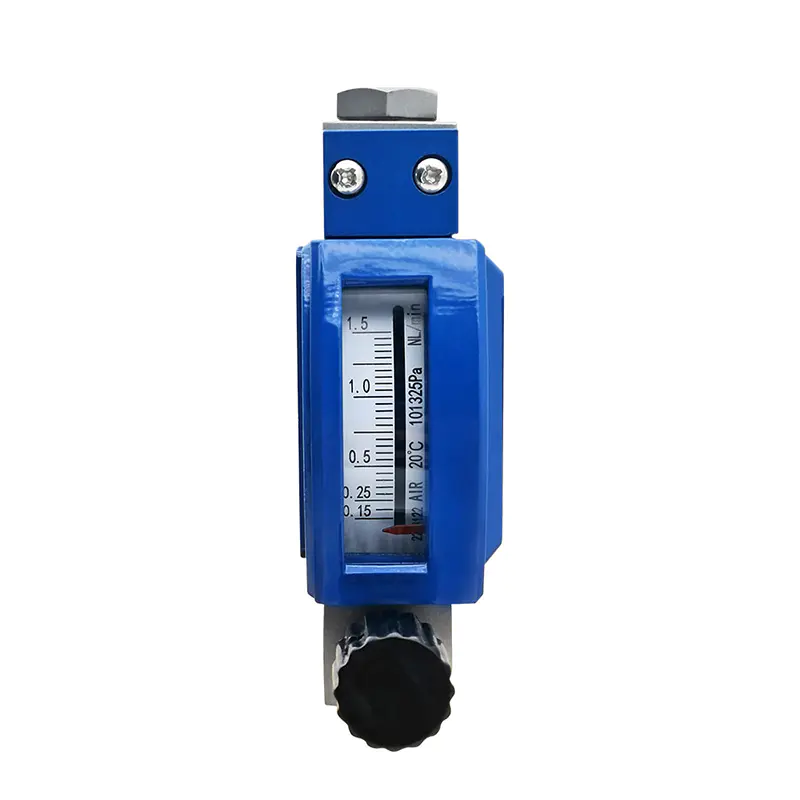
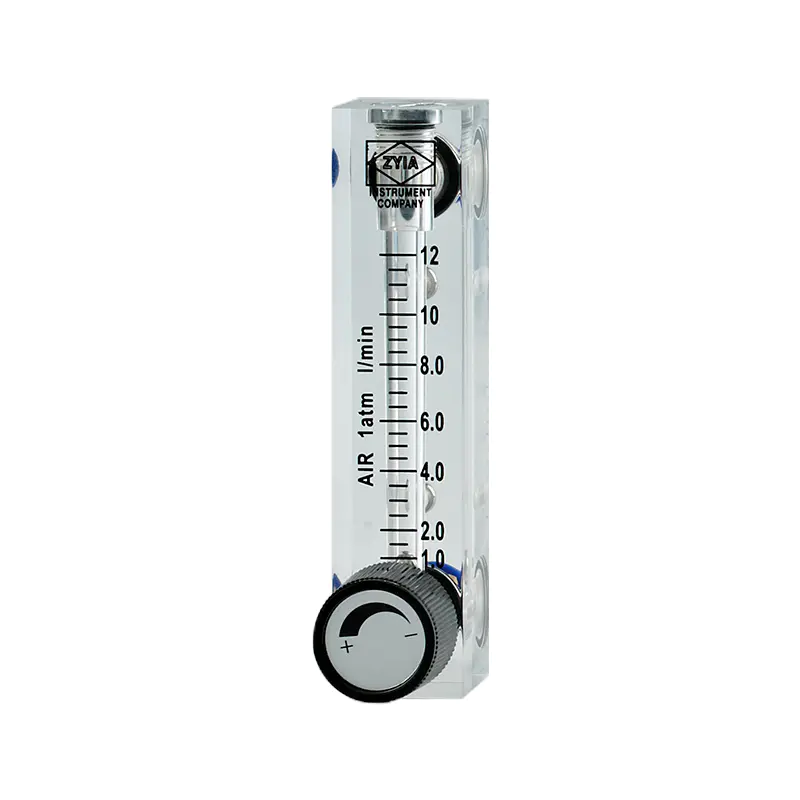
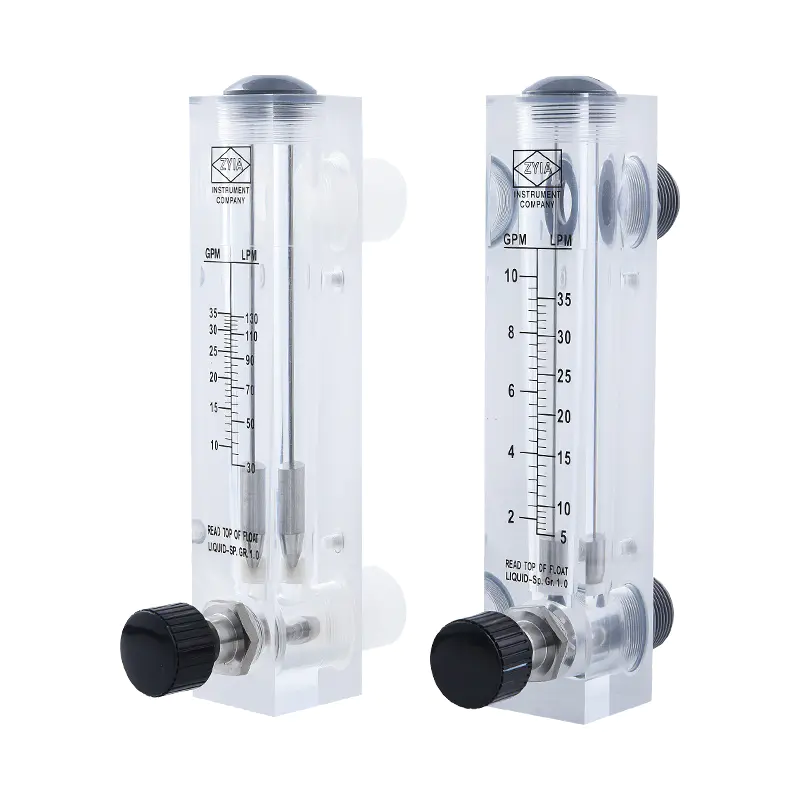
Variable area earns its place wherever a person stands in front of a panel. It needs no power, shows float position instantly and, unlike differential-pressure devices, barely cares whether the flow profile arriving at it is smooth. For miniature duties inside instruments and OEM equipment, a compact glass-tube unit such as the LZB DK800 covers air, nitrogen, oxygen and argon at low flows, with stainless-steel fittings and a direct-reading scale.
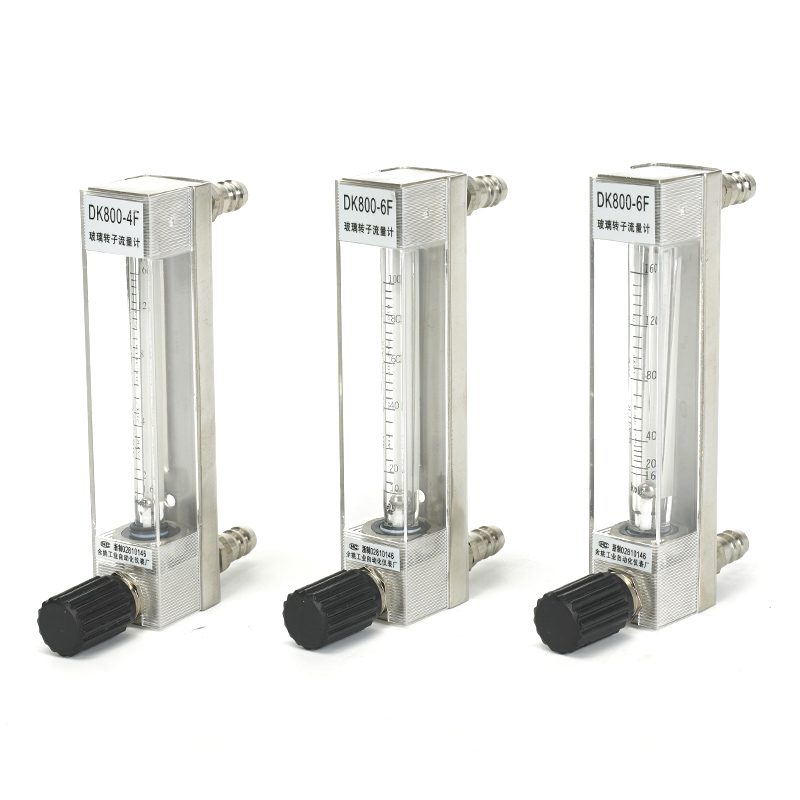 LZB DK800 Compact Glass Tube Gas Flow MeterA small glass rotameter with stainless-steel fittings for measuring and regulating low flows of air, nitrogen, oxygen and argon in instruments and OEM equipment, with tubes replaceable in the pipe run.View Product →
Matching Tube Material and Features to the Gas
The gas itself, the pressure behind it and the intended mounting decide the construction:
- Borosilicate glass (LZB series) — the general-purpose choice for air, nitrogen, oxygen, CO2 and argon; transparent, accurate and economical, with modest pressure limits.
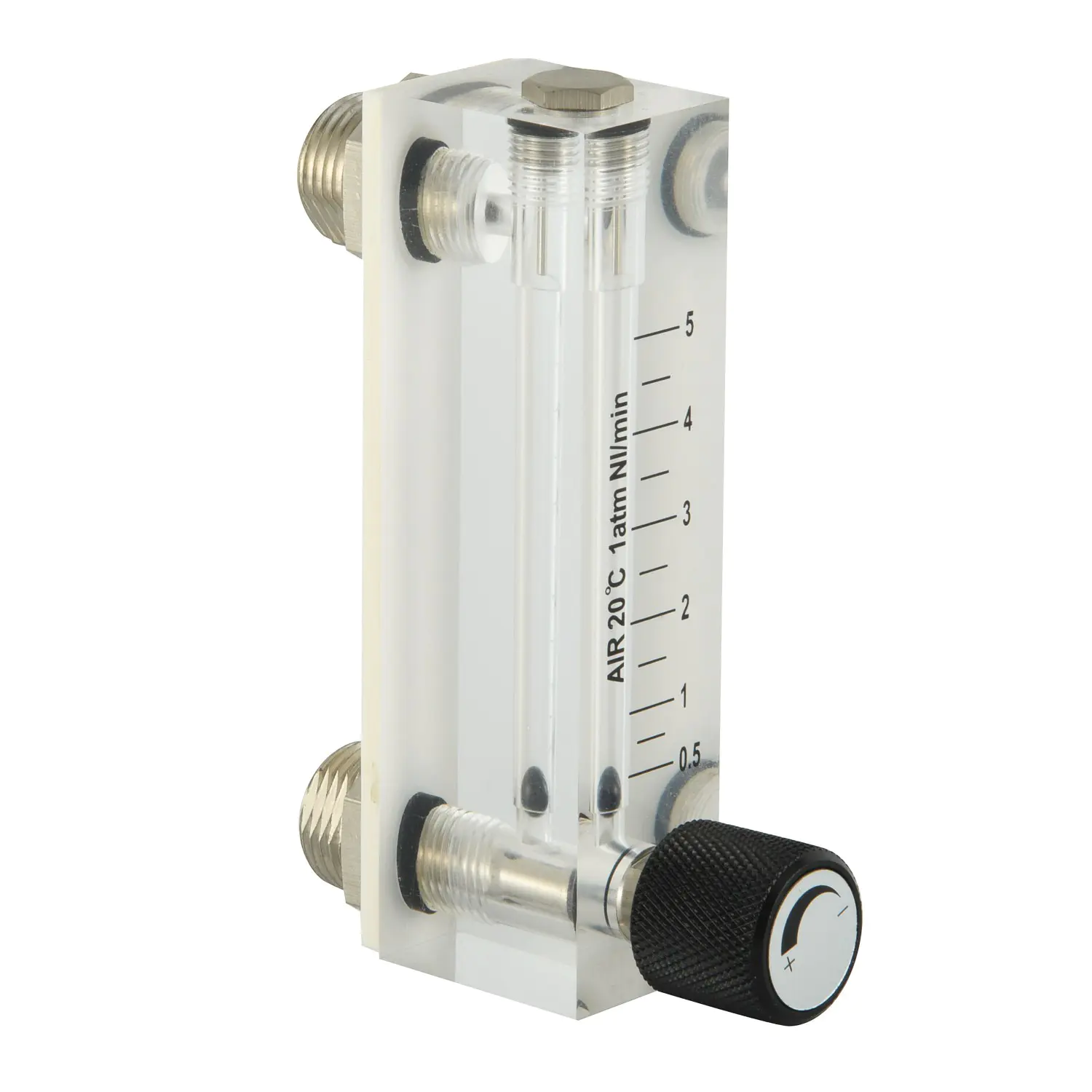
- Acrylic (LZM series) — panel-mounted and low in cost, often with an integral metering valve; the standard sight glass of oxygen concentrators, ozone generators and welding gas sets.
- Metal tube (LZ series) — takes over at high temperature, high pressure, or wherever the medium must not be visible or vented; available with transmitter output.
- Plastic tube (LZS series) — an economical family built for liquids and corrosive duties; in air-skid projects it often appears on the water and coolant lines that run alongside the gas line.
- Alarm limit switches — magnetic switches around the float track deliver high- or low-flow interlocks for burners, chillers and cooling circuits.
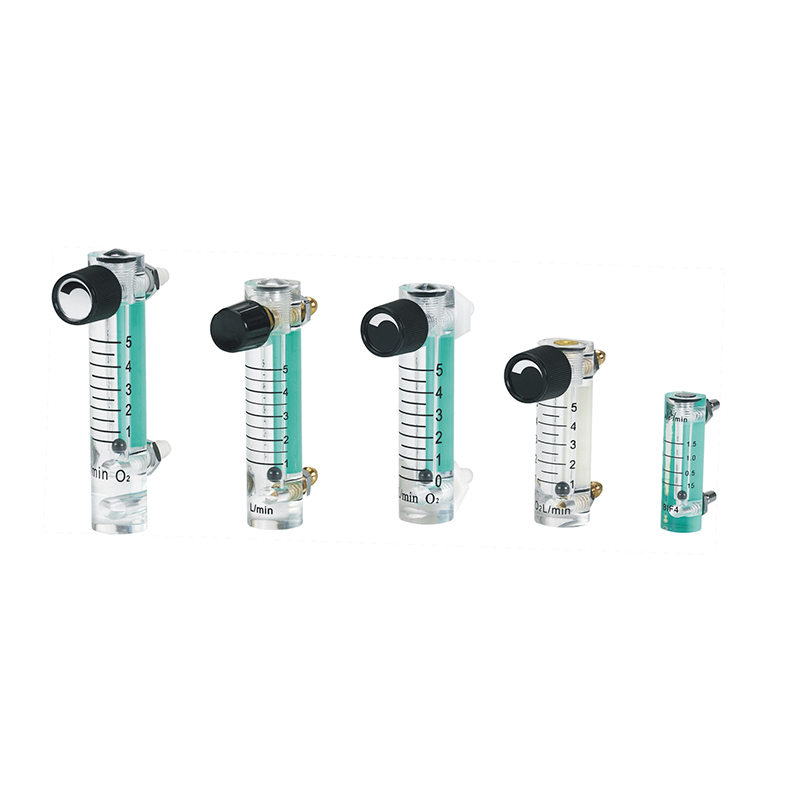
Medical equipment shows how specific this gets. Oxygen concentrator manufacturers need a meter that looks clean, reads steadily in the 1–6 L/min region and stays affordable at volume — precisely the niche the LZM6T medical oxygen flow meter was designed for.
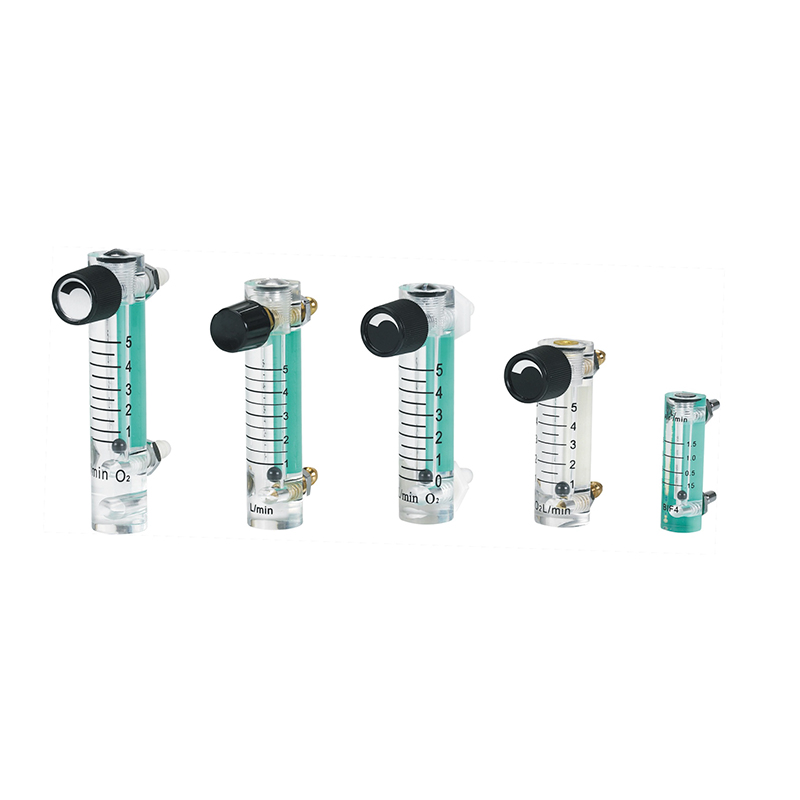 LZM-6T Medical Oxygen Flow Meter for ConcentratorsAn acrylic-tube float meter with agate float designed to read steadily in the 1–6 L/min range oxygen concentrator makers need, offered in volume at an accessible cost with easy mounting.View Product →
If glass-tube construction is on your shortlist, the details that separate a good specification from a weak one — float materials, accuracy class, connection styles — are covered in our guide to the functions and characteristics of the glass rotameter.
"A flow meter tells you how much gas is moving. A pressure gauge tells you the conditions it is moving under. Read together, they tell you whether the process is healthy."
— A working rule among instrument engineers
Specifying the Pressure Gauge to Match
On the pressure side, the Bourdon-tube gauge is still the reference for air and inert gases, and three selection rules do most of the work. First, range: keep steady operating pressure between one third and two thirds of full scale, so the needle sits where the accuracy class is actually meaningful. Second, duty: where a compressor or a fast-cycling valve creates pulsation and vibration, a liquid-filled case damps the movement and extends service life considerably. Third, function: if the panel must react rather than merely indicate, an electric-contact gauge adds adjustable set points, and a diaphragm seal isolates the movement from corrosive media.
For air, nitrogen and inert gas lines, a dedicated gas-pattern gauge such as the YTN series pairs naturally with the rotameters above — same panel, same mounting thread, one coherent instrument set.
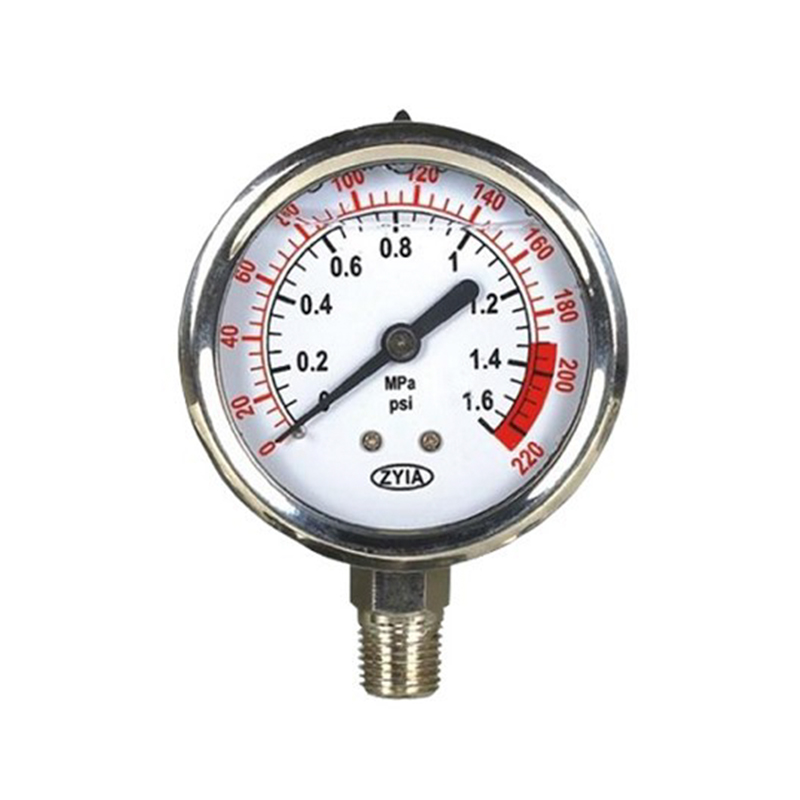 YTN-Series Liquid-Filled Gas Pressure GaugeA liquid-filled gas pressure gauge with damped, impact-resistant movement for air, nitrogen and inert gas lines, sharing panel mounting threads with the rotameters for a coherent instrument set.View Product →
Installation and Reading Practices That Protect Accuracy
Even a correctly specified meter reads badly if it is installed casually. Five habits cover most of the field:
- Mount the rotameter truly vertical with flow upward; even a few degrees of tilt biases the float position.
- Read at the widest point of the float — for ball floats, the centre of the ball.
- Record line pressure and temperature at the meter whenever the flow figure will be compared, billed or reported.
- Fit isolation and metering valves so flow can be adjusted and the meter removed without shutting the process down.
- Re-check against a reference at intervals; Bourdon gauges drift under years of pulsation, and a gauge reading low quietly corrupts every flow correction built on it.
What to Confirm Before You Order
The procurement risk in this product group is rarely the price; it is the detail nobody wrote down. Before requesting a quotation, pin down the medium and its cleanliness, minimum, normal and maximum flow, line pressure and temperature at the meter, connection type and thread standard, wetted materials, scale units with their reference conditions, and whether an alarm switch or transmitter output is required. Gas meters are routinely ordered with the right range and the wrong reference pressure — a two-line email on that point saves a return shipment.
Suppliers that manufacture rather than merely resell can absorb unusual requirements: non-standard connections, special scales, high-temperature configurations. Ask early, while the specification is still open.
The Takeaway
Specify air flow and pressure as one instrument set. Choose the flow technology by duty — variable area remains hard to beat for visible, low-to-medium-pressure gas panels — match the tube material to the gas, keep the gauge needle living in the middle third of its scale, and treat calibration pressure as part of the order rather than an afterthought.
Yuyao Kingtai Instrument builds both halves of that pairing: glass, acrylic, metal-tube and plastic rotameters; Bourdon, electric-contact and diaphragm-seal pressure gauges; and the solenoid valves that so often share the same panel. The company took part in drafting China's JJG 257-2007 verification regulation for rotameters, holds the national manufacturing license for measuring instruments, works to ISO 9001 and ships an annual output exceeding one million units to more than thirty countries, with custom designs available on request. Its credentials, certificates and factory details are collected on Kingtai's about page.