
 English
 русский
 Español
 Deutsch
 عربى
 italiano
 中文
Gas Flow Measurement Follows Different Rules
Liquids are nearly incompressible; gases are not. This one difference drives every practical decision in air and gas flow measurement. A reading of 100 m³/h at 8 bar and 20 °C is a completely different mass of gas than 100 m³/h at 2 bar and 50 °C.
Two terms matter more than any other: actual flow and standard flow. Actual flow is the volume passing through the pipe under existing line conditions. Standard flow is the same mass of gas expressed at a fixed reference condition, usually 1.01325 bar and 20 °C. If the meter does not state which value the scale represents, a reasonable-looking reading can be misinterpreted.
The reference condition matters. Comparing a flow meter reading with a compressor's installed capacity only works when both figures use the same reference. A 10 °C difference in reference temperature alone shifts the reported standard volume by roughly 3.5%.
For a broader introduction to how different meter families operate, the practical guide explaining what a gas flow meter is and how it works covers the basics without oversimplifying.
The Technologies That Actually Measure Air and Gas
Four families of meters dominate industrial air and gas measurement. Each works on a different principle and fits a different combination of pressure, flow range, display, and budget.
| Technology | Typical accuracy | Best suited for | Primary limitation |
|---|---|---|---|
| Variable area (rotameter) | ±2–4% full scale | Small-to-medium flows, local indication, low cost | Needs vertical installation; reading depends on line conditions |
| Thermal mass | ±1–2% of reading | Mass flow of clean dry gases, low flows | Sensitive to moisture, contamination, and gas composition |
| Vortex | ±0.5–1.5% of reading | Medium-to-large pipe sizes, moderate cost | Requires adequate Reynolds number; affected by vibration |
| Differential pressure (orifice) | ±1–2% full scale | Wide pipe size range, simple construction | Limited turndown; permanent pressure loss |
| Turbine | ±0.5–1% of reading | Clean gases, repeatable conditions | Moving parts wear; needs flow conditioning |
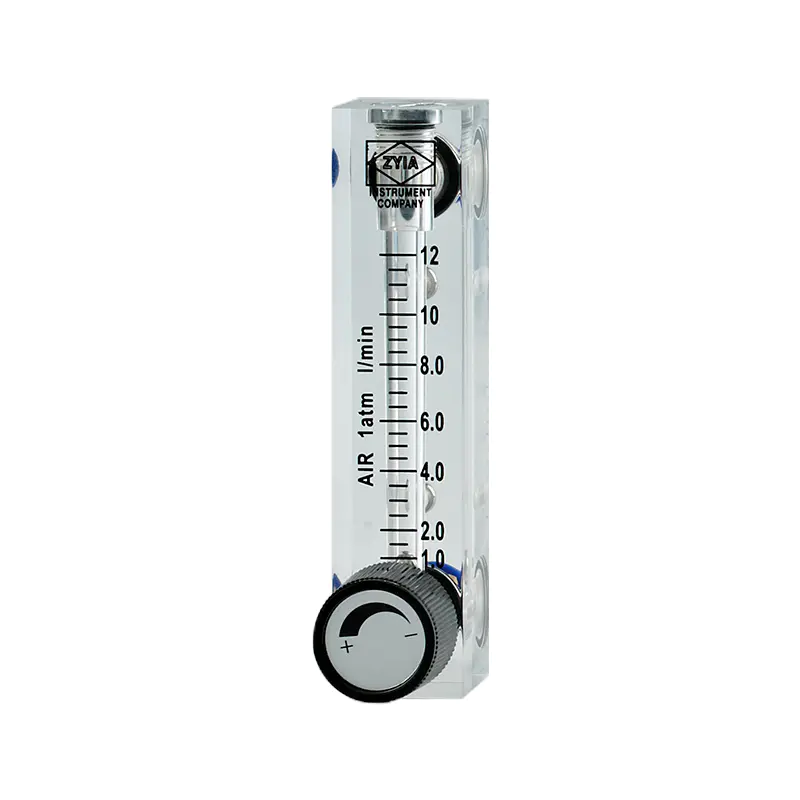
For most plant-side air and gas measurement tasks, the variable area rotameter is the most practical starting point. A float rides inside a tapered tube, and its vertical position indicates the flow rate. There is no power supply, no electronics, and no calibration drift in the measuring element itself.
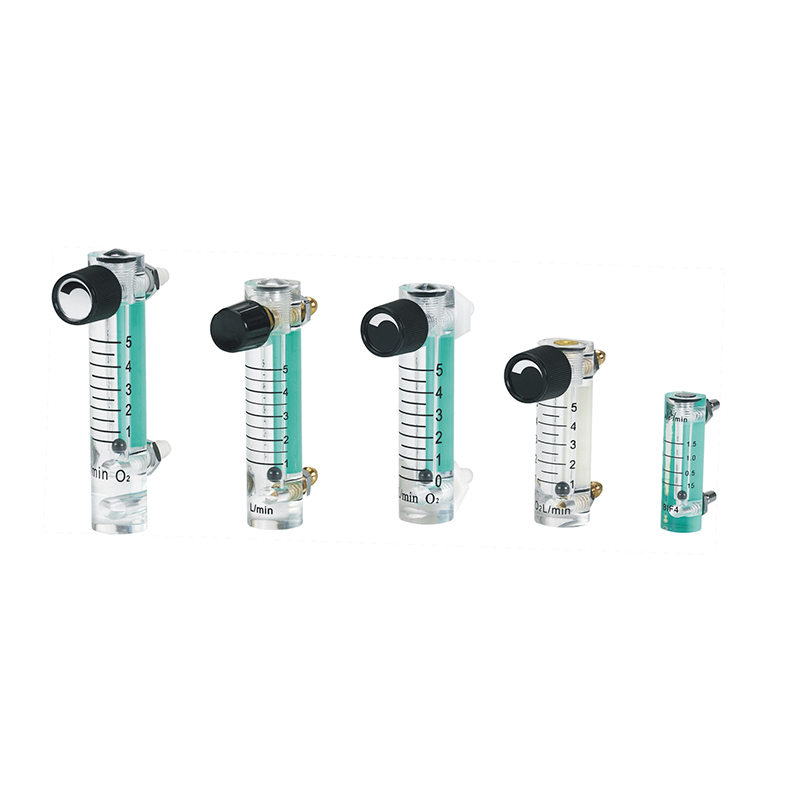
When the tube is glass, the meter tolerates aggressive chemicals and higher temperatures but needs protection against mechanical shock. When the tube is acrylic, the meter is lighter, more economical, and common on gas analyzers and medical equipment. When the tube is metal, the meter survives high pressure and temperature and can carry a transmitter for remote reading.
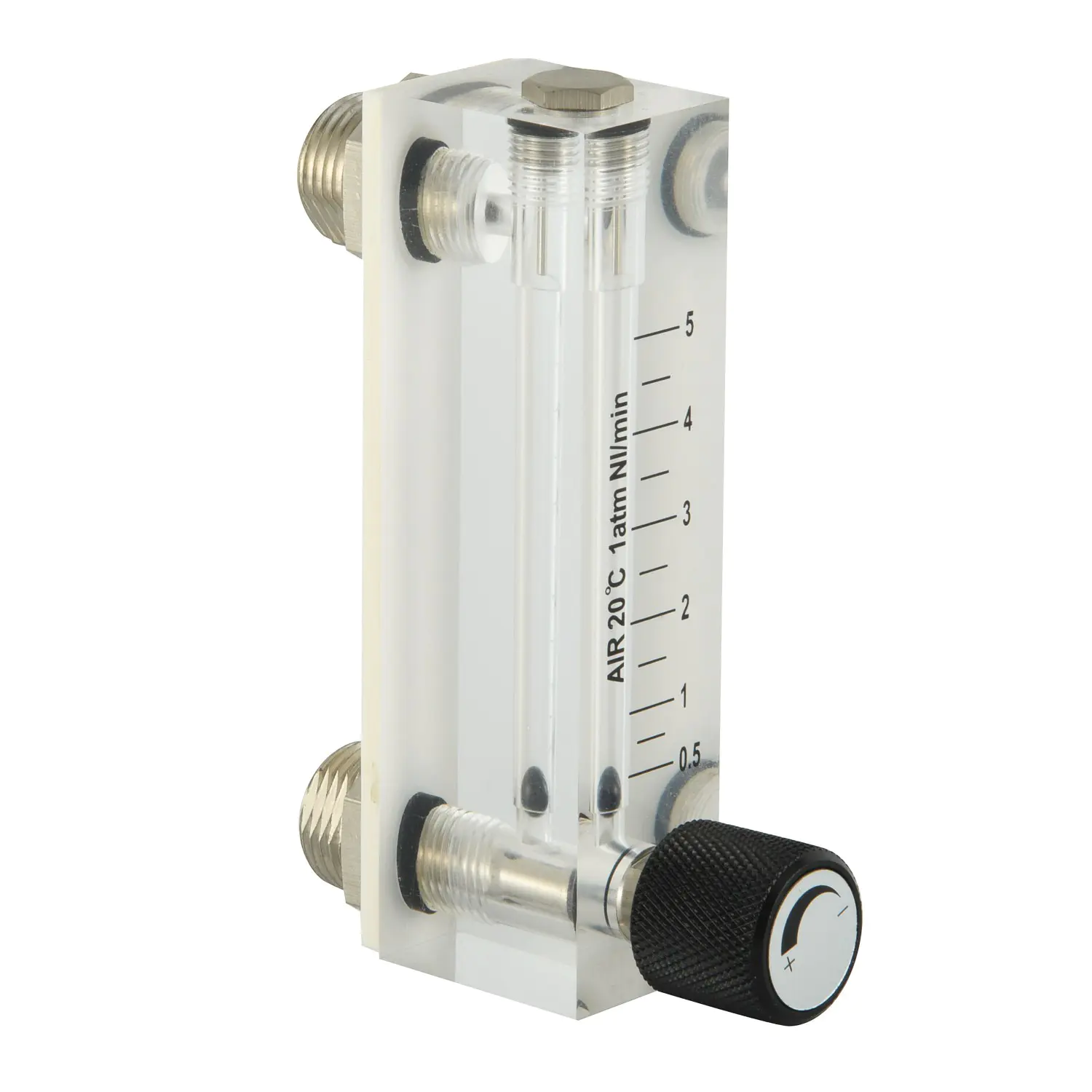
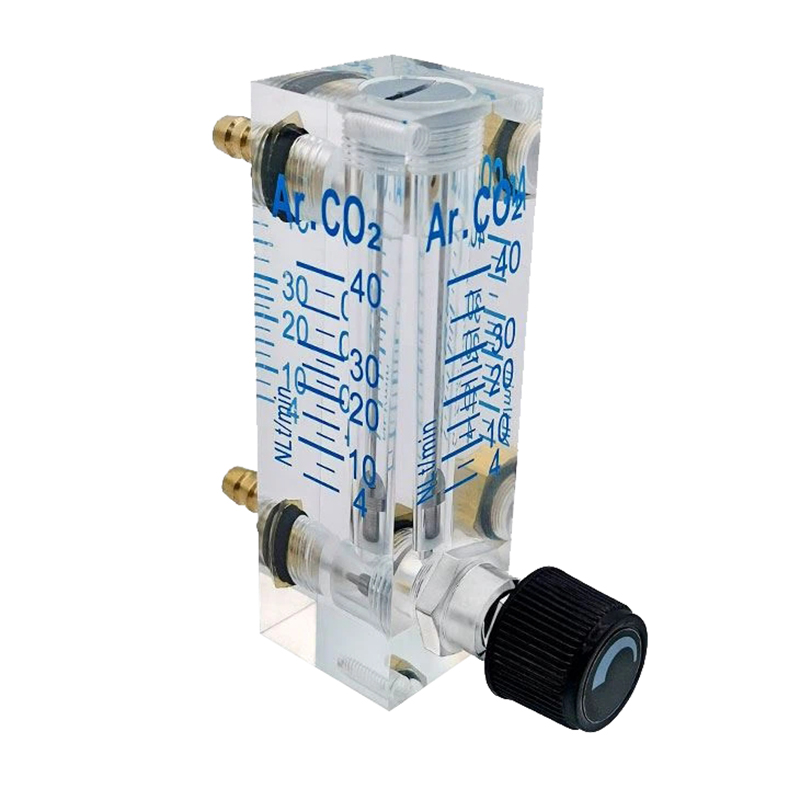 LZM-6T Acrylic Rotameter for Argon and CO2 Flow MeasurementThis compact acrylic rotameter suits argon and carbon dioxide gas lines, offering easy installation and portability for industrial settings. Its construction balances chemical resistance with economy, making it a practical choice when you need a reliable meter for mixed shielding gases.View Product →
What to Define Before You Compare Prices
Experienced buyers write down the process data before asking for a quote. The exercise takes ten minutes and eliminates most ordering errors in air gas flow meter procurement.
- Medium. Exactly which gas is being measured: air, CO2, argon, natural gas. Note any moisture, oil mist, or particulate content.
- Pressure and temperature. Minimum, normal, and maximum values. A meter sized for 2 bar behaves differently from one sized for 10 bar.
- Flow range. The minimum and maximum readings required. For a variable area meter, choose a scale where normal flow falls at 30–70% of full scale.
- Connection. Thread type and size, flange standard, hose barb, or panel-mount fitting.
- Output. Local indication only, 4–20 mA transmitter, alarm contacts, or a combination.
- Environment. Outdoor exposure, ambient temperature, humidity, and any washdown or corrosive atmosphere.
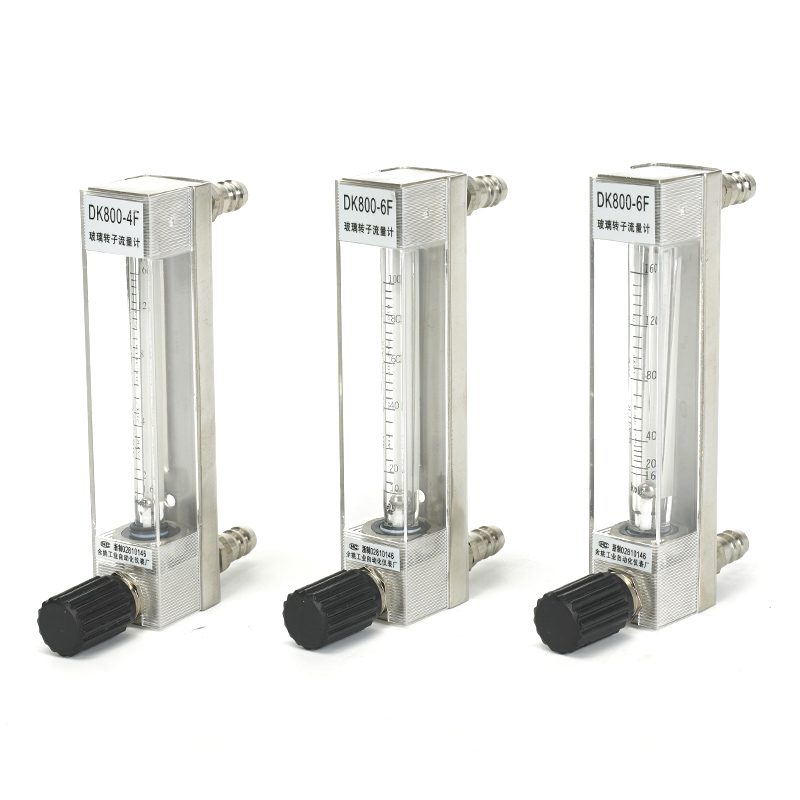 LZB-DK800 Mini Stainless Steel Glass Tube Flow MeterThis compact glass-tube rotameter handles small gas or liquid flows, with brass or stainless steel connections and replaceable tube and float. Its lightweight design eases installation and maintenance, ideal for furnace and heat treatment lines where precise small-flow readings matter.View Product →
Oversizing is the most frequent mistake. A rotameter that is too large for the real flow range sits near the bottom of the scale, where reading resolution is poorest. One that is too small sends the float to the top stop. Sizing the scale with the normal flow near half-scale gives the widest usable window.
On accuracy, a correctly selected variable area meter with proper installation typically delivers ±2–4% of full scale, which is sufficient for balancing, monitoring, and mass-balance checks. If the application demands billing-grade accuracy or strict mass-flow accounting, thermal mass or Coriolis meters belong to a different investment class, and the discussion should start with the required uncertainty rather than the meter itself.
Respect the pressure rating of acrylic tubes. Acrylic offers clarity and chemical compatibility, but its pressure limit is far lower than glass or metal. The maximum working pressure is printed on the meter body; if the marking is missing, replace the meter before service.
Installation and Reading: Where Accuracy Is Won or Lost
A well-specified flow meter still reads incorrectly if installed poorly. For variable area meters, the rule is simple and absolute: the tube must be vertical, and the flow direction must be upward. If the body is tilted, the float rests against the tube wall, wall friction distorts the reading, and displayed flow can shift by several percent.
The meter that is correctly sized and properly installed is almost always the meter that performs best.
Reading a glass-tube rotameter demands the same discipline. Read the scale at the center of the float's widest point, usually the top edge of the float. The scale printed on the tube is valid only for the float supplied with that meter; a substitute float without recalibration invalidates the reading.
Straight-pipe requirements for rotameters are modest; a few diameters upstream is normally enough for the float to sit stable. Pulsating flow from a reciprocating compressor makes the float jump and read high, so place the meter downstream of an air receiver or add volume between the pulsation source and the meter.
Gas quality matters as well. Oil mist, condensed water, or particulate from a compressor will coat the internal tube wall, add friction, and slow the float's response. In dry filtered air, a rotameter holds accuracy for years; in contaminated compressed air, the tube and float need periodic inspection. The guide on selecting, installing, and reading a rotameter gas flow meter covers these steps in detail.
Calibration and Long-Term Reliability
A flow meter is only as trustworthy as its last verification. Rotameters have no electronic drift, but the float and tube can change through wear, deposits, or damage. In continuous process duty, verify the meter against a known reference—a sonic nozzle, a wet gas meter, or a calibrated master flow meter—at least once per year, and before commissioning after any repair.
Manufacturers calibrate rotameters for air at a defined reference condition, commonly 20 °C and 1.01325 bar. When the meter operates at a different pressure or temperature, gas density changes and the float settles at a different position. Specify the operating pressure when ordering so the scale matches real conditions. If moved to another pressure or gas, the reading must be corrected or the scale recalculated.
Paperwork is part of reliability. Documented calibration and manufacturing traceability matter in quality audits. Look for manufacturing licenses, ISO 9001 certification, and traceability to the relevant metrological standards—for float flowmeters in China, that is the national regulation JJG257.
Matching the Meter to the Job
Once the process data is written down, the answer appears by elimination:
- Clean dry gas with local reading and small-to-medium flows: choose an acrylic or glass-tube rotameter.
- Corrosive gas or higher temperatures: use a PTFE-lined or glass rotameter.
- High pressure or high temperature with occasional over-range: a metal-tube variable area meter.
- Signal for a control system: a variable area meter with 4–20 mA transmitter, or a thermal mass meter.
- Alarm on a local-reading meter: a variable area meter with a limit switch.
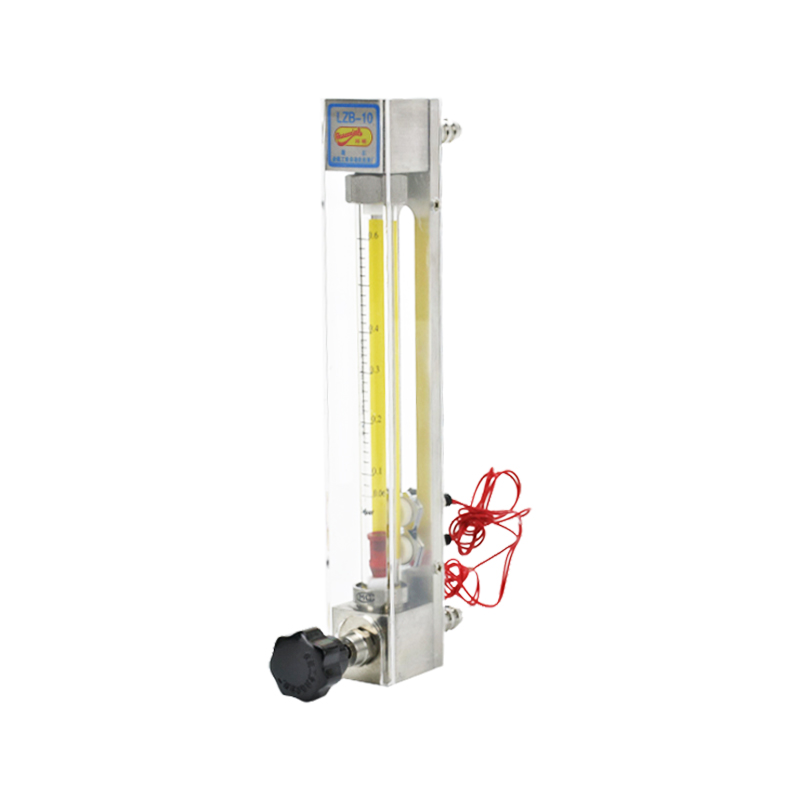 LZB Series Gas Flow Meter with Adjustable Alarm Limit SwitchesAdd high or low flow alarms to your gas line with this rotameter featuring magnetic reed switches that trigger at preset positions. Relays can drive sound or light warnings, helping you monitor minimum and maximum flow conditions in industrial processes without constant visual checks.View Product →
If the flow range is genuinely unknown, a temporary survey with a pitot tube or a clamp-on ultrasonic meter can establish the actual range before a permanent meter is purchased. It sounds like extra effort, but it prevents the most frequent mistake: ordering the right technology with the wrong flow range.
Define the process conditions, decide how the reading will be used, choose the simplest technology that meets the accuracy requirement, and install it as the manufacturer specifies. A meter that matches its conditions outperforms one with more features every time.