
 English
 русский
 Español
 Deutsch
 عربى
 italiano
 中文
Float position, scale units, and the temperature–pressure corrections that make a reading worth recording.
Reading an air flow meter is simpler than most maintenance guides suggest. On a variable-area flow meter — the transparent tube with a float inside — the flow rate is the value aligned with the float, not the value at the top of the scale. Once you know where to look, the remaining challenge is units: a reading of 20 L/min at 7 bar of line pressure describes a very different quantity of air than 20 L/min at atmospheric pressure. This article walks through the reading method, the correction, and the field checks that turn a number on a scale into a measurement you can trust.
Start With the Float Position
In almost every air flow meter of the variable-area type, the tube is tapered and the float rises until the drag of the flowing air balances the float's effective weight. The higher the flow, the larger the annular gap around the float, and therefore the higher the float sits. The scale printed on the tube is a height gauge: it translates float position into flow rate. This is why the first rule of reading is to look at the float, not at the tube markings in isolation.
Rotameter reading rule: read at the top plane of the float. For a spherical float, read at the equator — the widest horizontal line of the ball.
Different float geometries use different reading points. Manufacturers normally mark the reading point on the float itself when a special shape is used. Use the following table as your first reference, and confirm with the tube's instruction label.
| Float design | Reading point | Typical use |
|---|---|---|
| Flat-top or conical float | Highest horizontal edge of the float | Glass tube rotameters for clean, dry air |
| Spherical or ball float | Equator (center line) of the ball | Small acrylic and plastic tube meters |
| Piston with engraved line | The engraved reference line | Metal tube variable-area meters |
| Float with a sharp shoulder | Top of the shoulder | PTFE-lined and corrosion-resistant models |
Read at eye level to avoid parallax. Sight across the tube so your eye is exactly perpendicular to the scale. A reading taken from above or below can easily shift by one or two scale divisions — significant when the total scale is only 100 mm long.
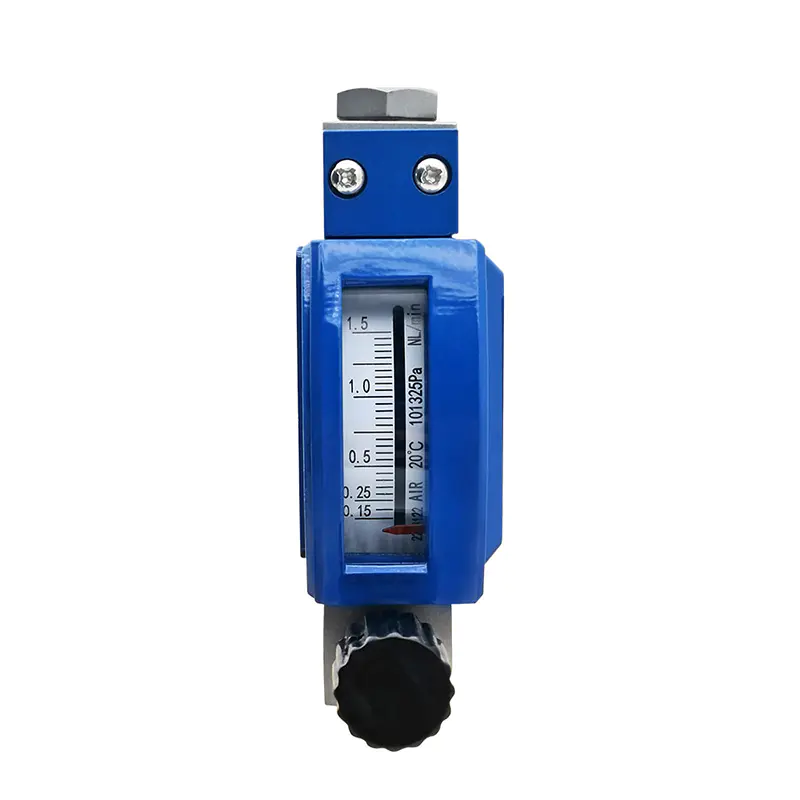
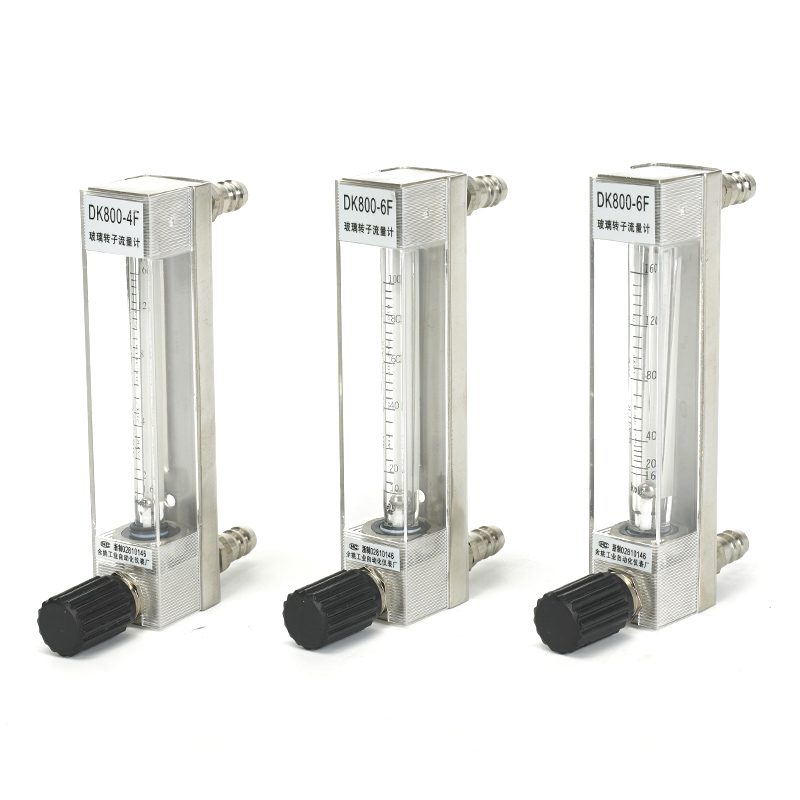 LZB-DK800 Mini Glass Tube Flow Meter for Low-Pressure GasThis compact stainless steel float meter offers direct, repeatable low-pressure gas readings. Its 100 mm scale requires eye-level reading, and keeping the tube clean and dry preserves accuracy, making it a reliable choice for small flow measurement.View Product →
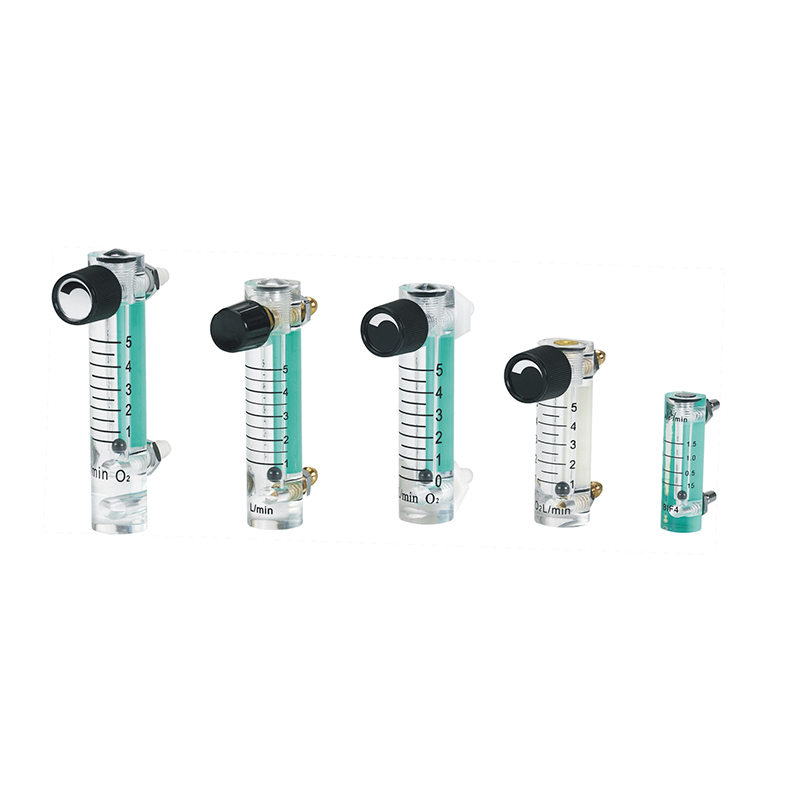
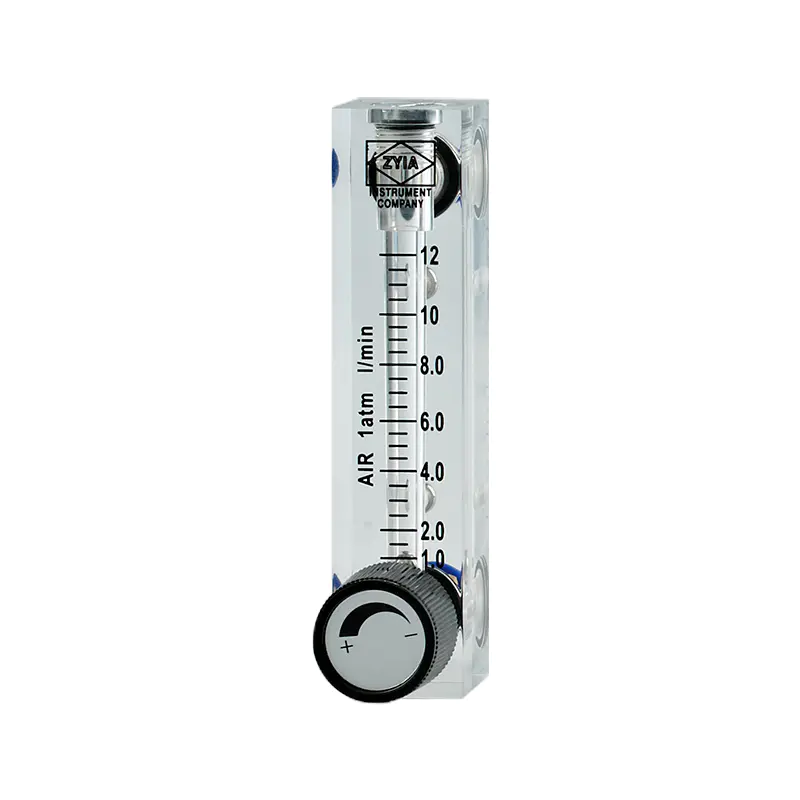
For clean, dry air lines at low pressure, a glass tube meter such as the LZB-DK800 miniature series gives a direct, repeatable reading at the top edge of the stainless steel float. Keep the tube clean and the float dry, and the scale stays true for years.
Know Your Scale Units
An air flow meter scale is meaningless without its unit. The three unit families you will meet most often are liters per minute (L/min), cubic meters per hour (m³/h), and cubic feet per minute (CFM). In compressed-air and instrumentation work, you may also see normal liters per minute (NL/min) or standard liters per minute (SLM), which state the flow converted to a reference condition rather than the actual volume passing through the meter.
- L/min and m³/h describe actual volumetric flow at the meter's operating conditions.
- NL/min and SLM describe the equivalent flow at standard conditions — usually 0 °C or 20 °C and 1.013 bar.
- CFM is common on equipment imported from North America; 1 CFM equals about 28.3 L/min.
Before you record a reading, check which of these the scale represents. A meter calibrated in NL/min will read lower than a meter calibrated in actual L/min at elevated pressure, even in the same pipe, because the gas is compressed.
| Unit | Typical application | Conversion note |
|---|---|---|
| L/min | Lab gas, panel-mounted flow meters | Base unit for small flows |
| m³/h | Duct air, ventilation, larger pipes | 1 m³/h = 16.67 L/min |
| CFM | Compressed air tools, US-made equipment | 1 CFM ≈ 28.3 L/min |
| NL/min or SLM | Instrument air, gas analyzers | Referenced to standard conditions |
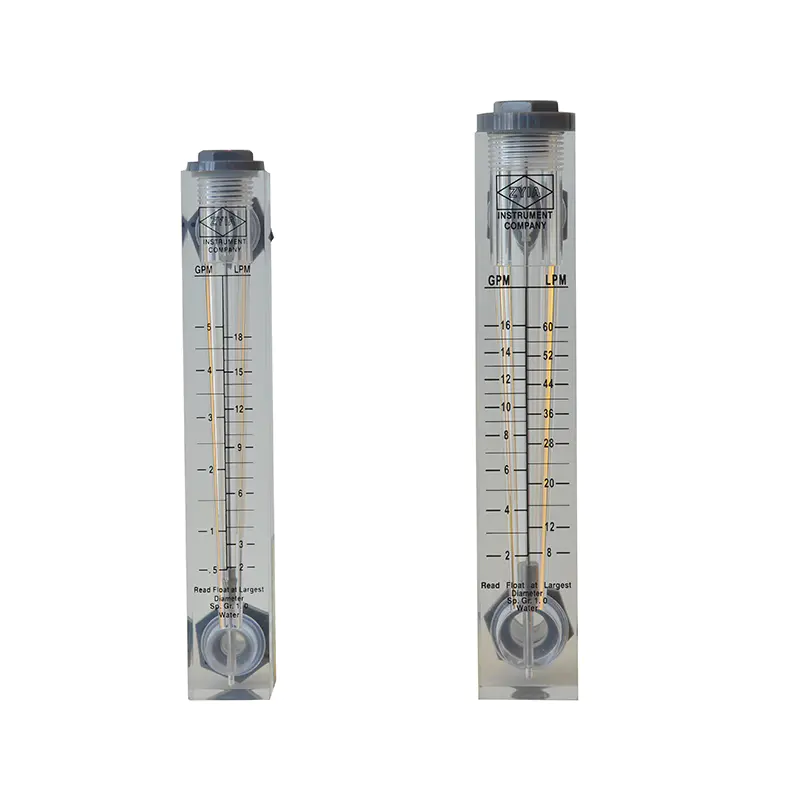
Our detailed guide on reading the glass rotameter scale shows how the printed scale is laid out and how to interpolate between division lines when the float sits between two marks.
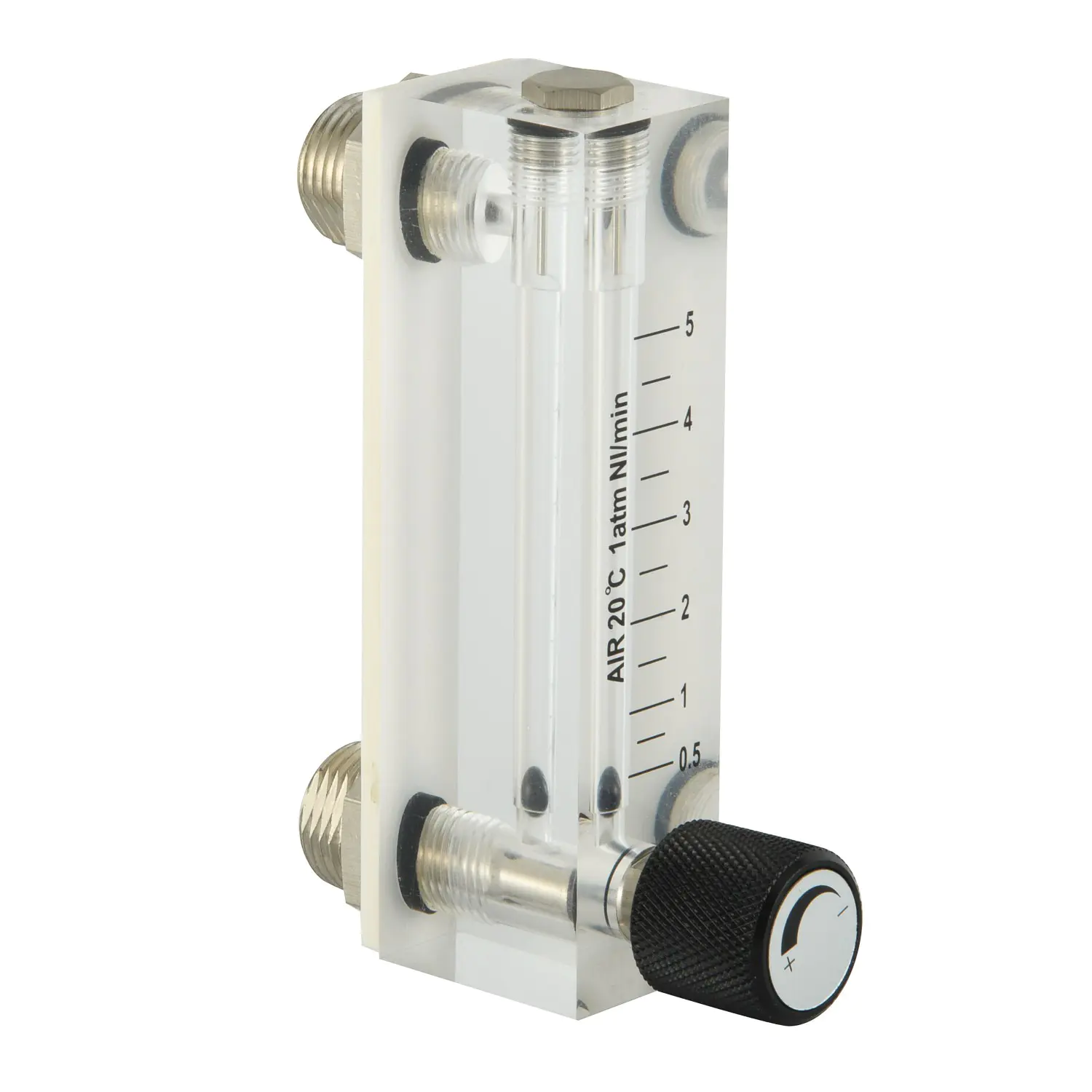
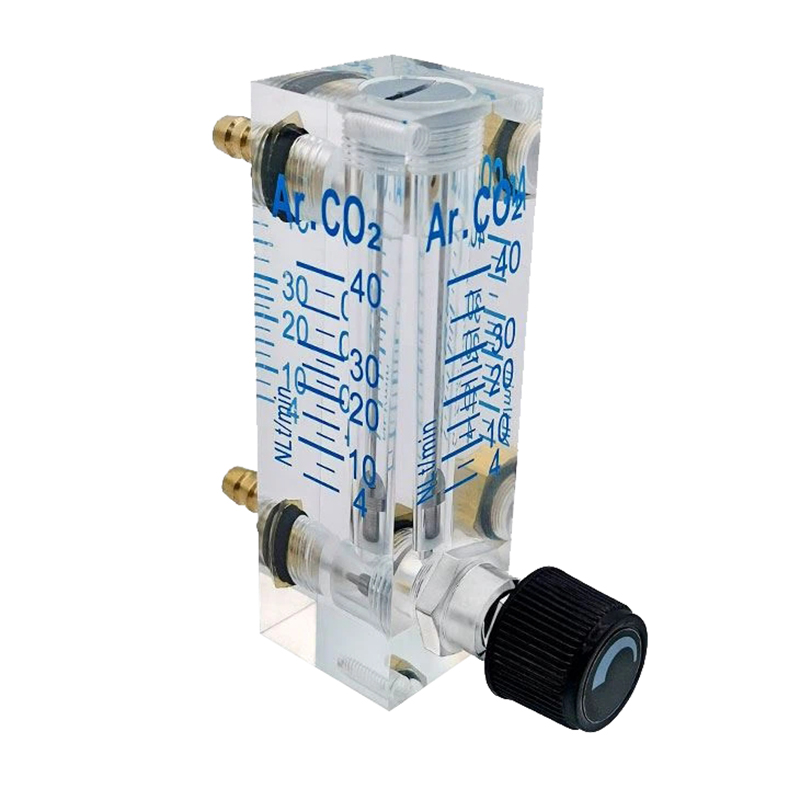 LZM-6T Acrylic Rotameter for Argon and CO2 GasesThis portable, panel-mount rotameter provides accurate flow measurement for argon and carbon dioxide, with an ergonomic design and simple installation. Its scale is gas-specific, so confirming the gas identity is essential before interpreting readings.View Product →
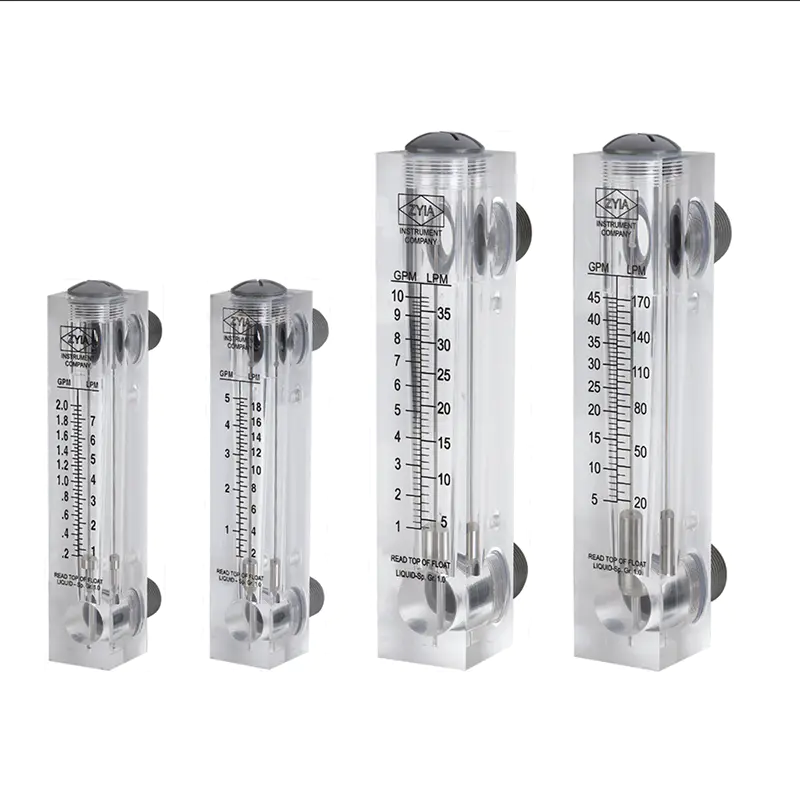
For argon, carbon dioxide, and air at moderate pressures, the LZM6T acrylic rotameter is a compact panel-mount option; because its scale is optimized for the intended gas, always confirm the gas identity before interpreting the numbers.
Correct for Temperature and Pressure
Air is compressible, and most variable-area meters are calibrated at a reference condition stamped on the nameplate — commonly 20 °C and 1.013 bar absolute (atmospheric pressure). If the meter is installed on a compressed air line at 7 bar gauge, the actual volumetric flow at the meter condition is far smaller than the same scale reading would imply at atmosphere. In practice, the scale reading must be multiplied by a correction factor based on the absolute pressure and the absolute temperature at the meter.
The correction matters most when you use the reading for mass balance, compressor sizing, or gas consumption accounting. For a simple rotary flow indication — for example, confirming that a cooling fan is moving air — the uncorrected scale reading is usually adequate.
Think of the scale as a map of float position, not a direct measurement of mass. The same float height at different pressures means different amounts of air molecules.
Quick Checks for a Reliable Reading
An air flow meter gives trustworthy numbers only when the installation is honest. Use this checklist before you record a value:
- Check that the tube is vertical; variable-area meters are calibrated for vertical mounting, usually within 2 degrees of plumb.
- Let the float stabilize for a few seconds; pulsating flow from a reciprocating compressor can make it oscillate.
- Look for dirt, oil film, or moisture on the tube wall; contamination makes the float stick and produces readings that are first too high, then too low.
- Confirm the scale zero: with the flow stopped, the float should rest at the lower stop or on the bottom scale mark.
- Read at eye level and record the unit, the gas, and the line pressure together with the number.
Choose an Air Flow Meter You Can Read Confidently
Reading is easiest when the meter is matched to the job. For clean, dry air at low pressure, a glass tube rotameter offers the clearest scale and the simplest reading point. For corrosive gases or installations where breakage is a concern, an acrylic body gives good visibility in a lighter package. For outdoor installations and water treatment, a durable plastic tube resists weathering better than glass.
Our experience at Yuyao Kingtai Instrument is that most reading errors trace back to a mismatch between the meter's calibration and the actual gas, pressure, or mounting orientation. A meter that is correctly specified is almost always a meter that is correctly read.
When you compare products, look at three things: the scale length (longer scales are easier to read), the float material, and the maximum pressure rating of the tube. A short, cramped scale may force an error of ±5 percent before you even begin to correct for pressure.
Reading an air flow meter comes down to three habits: locate the correct point on the float, confirm the unit and gas identity on the scale, and correct for the actual pressure and temperature when the number matters. Add the discipline of reading at eye level and keeping the tube clean, and the meter becomes a dependable instrument rather than a source of doubt. The next time you stand in front of a rotameter, identify the float's reading point first — everything else follows from that single observation.